Welcome to the Forgotten Women of Craiglockhart project.
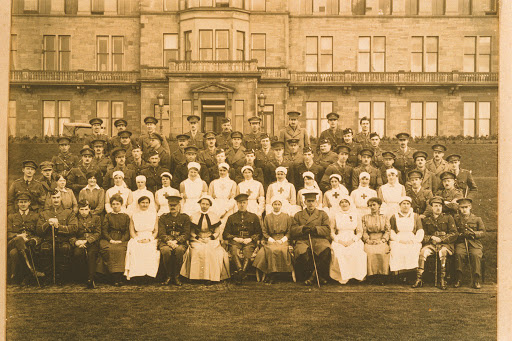
This project shines a light on the work of nurses at Craiglockhart War Hospital during the First World War. It explores the gendering of care and discusses the women of Craiglockhart in relation to modern trauma treatment.
Methodology
Microhistory is a way of focusing on a specific site (in this case, Craiglockhart War Hospital) in order to delve more deeply into histories that would otherwise go overlooked.
By examining the reality of the nurses’ work through the micro-historical lens, we can begin to break away from the often-idealised vision of wartime nursing, and bring the forgotten contributions of Craiglockhart’s women to the fore.
The fact that these histories often fail to include women’s stories speaks to the long-held patriarchal notion that women’s stories serve only to bolster the central male figures – a pattern which we can observe being repeated at Craiglockhart as the work of the doctors is remembered and the nurses are forgotten.
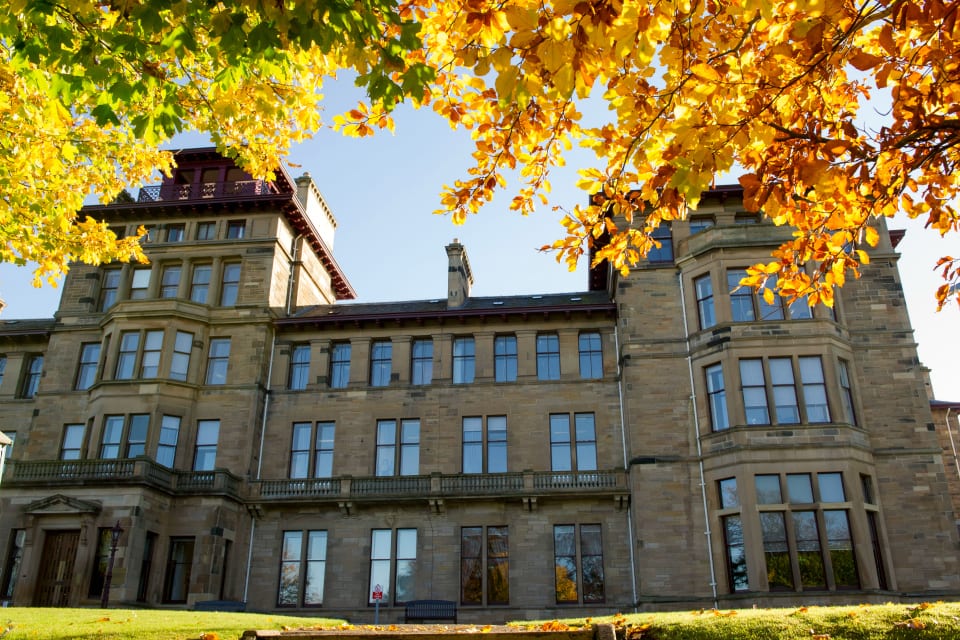
The small intimacies and genuine connection between the nurses and patients of Craiglockhart shine a light on how important the nurses truly were to the recovery of traumatised soldiers. It is not only the medical contributions that we have to remember about the women of Craiglockhart, but their personal touches and the affect that they had on the lives of the men for whom they cared.
There is little detail that exists of the women of Craiglockhart, as a result of the dismissal of women’s wartime experiences. The suppression of women’s emotional labour as war work was done in an effort to maintain favourable public opinion, and to continue to uphold the idealised feminine figure. This tactic of reducing the role of nurses down to an ideal ensured that women faded into the background of the wartime narrative and allowed their work to be forgotten.
We know of only a handful of women who contributed to the work at Craiglockhart: Grace Barnett, Louise Thomson and Florence Mellor were nurses whose work is commemorated through the efforts of their families and, in Thomson’s case, through her connection to Siegfried Sassoon. The only other female figure of Craiglockhart who has continued to hold a place in the site’s history is Matron MacBean. I also learned of a group referred to as ‘Dr Brock’s ladies’: volunteers who took patients for day trips into the city. Yet, these women are not remembered as individuals who contributed to the soldiers’ recovery, but as the ‘ladies’ of a renowned doctor.
Through the lens of a modern understanding of trauma, we can understand that the nurses would have suffered severe stress as a result of treating the soldiers; containing patients’ trauma, working 12 hour days, and even having to sedate patients would all have taken its toll.
The writings of The Hydra – the hospital’s patient-run magazine – give an insight into the relationships between the nurses and their patients. The emotional work of nurses went further than containing trauma, as they became friends and confidantes for their patients – thus proving the immense value in having emotionally open and rich relationships.
The fact that the stories of nurses at Craiglockhart – and beyond – have for so long been forgotten makes the details that remain of their work even more precious. Nurses at sites like Craiglockhart were providing crucial, innovative care in a militarised environment that did not see their contributions as valuable, and did not want their voices to be heard. Yet in spite of the harsh physical and emotional demands of their positions, the women who served at the war hospital were able to contain the traumas of their patients and develop heartfelt connections. An editorial passage written in The Hydra captures the sentiment of the soldiers towards the women who cared for them: ‘If there is any one able to cure us of this cynicism it is our V.A.D.’s. They sigh often enough over us. We think it is time to thank them for their work in this Hospital.’ This is what this research sets out to do; acknowledge the work done by the women of Craiglockhart and hold their efforts in the regard that they deserve.
Forgotten Women of Craiglockhart
The FWC project is curated and written by Rosie Latto and funded by the Carnegie Trust.
About Me
I am Rosie Latto, an undergraduate student, researcher and writer based in Edinburgh. My research focuses include feminist theory, global conflict throughout history, and political science.
 The Forgotten Women of Craiglockhart